
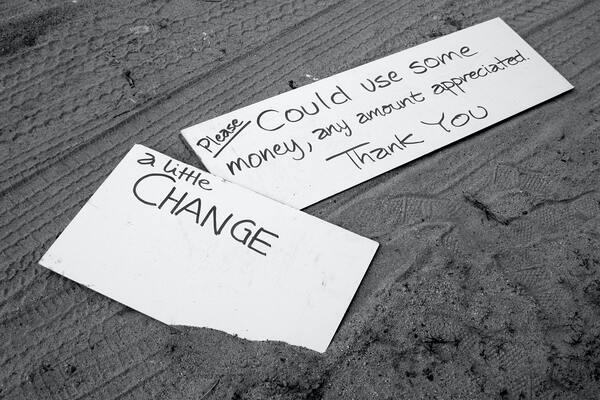
Under Penal Code 647c, panhandling in California is illegal. However, the act of sitting in a public area holding a sign asking for money is not. Passively awaiting a handout in a public place is known as Passive Panhandling. In California, Passive Panhandling is not illegal, though its counterpart, Aggressive Panhandling, is. Because of the differences in legality surrounding panhandling in California, individuals must know the difference between their First Amendment Rights and State Legislation.
Understanding the Basics of Panhandling in California:
Section 647c of the California Penal Code is the legislation responsible for outlining the legalities of panhandling. Specifically, Section 647c defines Panhandling as the intentional act of maliciously obstructing the movement of an individual to move freely across any sidewalk, street, or any other public area. This action is commonly known as Aggressive Panhandling. Under California Penal Code Section 647c, it is the specific act of Aggressive Panhandling and Accosting that is illegal. In California, individuals the court finds guilty of engaging in this act are liable to a misdemeanor charge. Under regulations set forth by the California Penal Code, Aggressive Panhandling is illegal. Although, the following exceptions exist about Panhandling in the United States to protect the First Amendment Rights of American Citizens:
- Engaging in the act of solicitation for a charitable cause.
- Engaging in the act of solicitation without exhibiting aggressive behavior as defined by California Penal Code
What is Aggressive Panhandling?
Due to the protections afforded to Americans by the Constitution, the legal limitations placed upon panhandling by California do not apply to all solicitors. The California Penal Code can only govern public spaces. Because of this, though California Penal Code Section 647c does ban solicitation, the wording of the bill itself clearly defines the type of solicitation that the law considers illegal. California Penal Code Section 647c makes accosting someone as a solicitation tactic unlawful. Accosting someone includes the use of harassment, threatening actions, words, or intimidation. The behavior of accosting while panhandling is illegal. Still, the first amendment protects an individual’s right to sit in a public space, holding a sign asking for money. Under the regulations of California Penal Code Section 647c, passively sitting or standing in a public area complacently awaiting a handout is not legally considered an act of accosting.
What is Passive Panhandling?
Unlike Aggressive Panhandling, Passive Panhandling is not illegal in California. Passive Panhandling is the act of engaging in solicitation in public spaces without using tactics such as harassment, intimidation, or any threatening words or actions. Passive Panhandling is simply remaining in the public area awaiting a handout, an act that often occurs without even exchanging words. An individual engaging in Passive Panhandling will not be exhibiting behavior that obstructs other members of the public’s access to roadways, walkways, or any other public facility.
Panhandling in California: Public Spaces
Whether an individual engages in Aggressive or Passive Panhandling, California Penal Code Section 647c only applies to public spaces. Because of this wording, the legal difference between public and private spaces is beneficial for individuals when attempting to understand the rights the First Amendment protects.
In California, the following spaces are public:
- Streets
- Sidewalks
- Public Transportation
- Parks
- Government Buildings
- Public Parking Lots
Because these areas are public places in California, law enforcement authorities can intervene in situations surrounding aggressive panhandling under regulations set forth by California Penal Code Section 647c. However, as previously mentioned, the California Penal Code holds no authority over acts of panhandling that occur on private property. The following places are outside of Section 647c’s jurisdiction as they are private spaces under California law:
- The parking lots outside of privately owned stores
- Stores
- Shopping Malls
- Apartment Buildings (with some exceptions)
- Residential Areas & Properties
What are the Penalties for Panhandling in California?
In California, the act of engaging in aggressive panhandling and violating Section 647c of the California Penal Code is a misdemeanor offense. Individuals who the court convicts of this offense are subject to either or both of the following penalties:
- Approximately $1,000 in fines
- Sentenced to serve up to one (1) year in a California Jail.
Individuals guilty of violating Section 647c can receive additional charges depending on the specific circumstances surrounding this offense. In California, some of the most common legal violations that coincide with a breach of Section 647c are:
- A violation of California Penal Code Section 415: Disturbing the Peace
- A violation of California Penal Code Section 602: Trespassing
- A violation of California Penal Code Section 646.9: Stalking
- A violation of California Penal Code Section 647: Disorderly Conduct
A violation of California Penal Code Section 647c alone does not directly equate to an additional violation. However, an individual who exhibits these behaviors and engages in the act of aggressive panhandling may be liable for these additional charges. Unlike Aggressive and Passive Panhandling, there is no difference in the above charges. If the court charges an individual with a violation and a breach of Penal Code Section 647c, the penalties associated with sentencing will likely increase.
Defending Oneself Against an Aggressive Panhandling Charge:
The act of solicitation is only a crime when the guilty individual accosts someone. Therefore, there are instances where an individual that the court charges with a violation of Penal Code Section 647c will be able to defend themselves successfully. Because of the California Penal Code’s Lack of jurisdiction over private property, the following defenses may help absolve an individual of this kind of misdemeanor charge:
- The act of solicitation that the court alleges occurred on private property
- The act of solicitation was not aggressive, or authorities mistakenly identified it as accosting.
- Authorities violated the individual’s First Amendment rights by charging them.
Contact Pride Legal
If you or a loved one are facing charges or harassment for panhandling in California, we invite you to contact us at Pride Legal for legal counseling or any further questions. To protect your rights, hire someone who understands them.